
Errors
Errors belong to the stage that produced them. Setup errors stop a form from existing; validation errors stay on fields; submission errors fail one attempt; report errors stay in one report.
| Stage | Error | Where it shows |
|---|---|---|
| Setup | SchemaNormalizationError (with path), RegistryError, layout TypeError |
Thrown by mountForm, createFormView, createForm. |
| Validation | ValidationError (with result) |
Field and form messages; submit() rejects. |
| Transport | SubmitError (with cause) |
Form error and every report; submit() rejects. |
| Cancellation | SubmissionAbortedError |
Reports return to idle; submit() rejects. |
| One report | message in report.state.error |
That report only. |
| Misuse | EngineError |
Thrown by the call, such as a second submit() while one is running. |
ValidationError, SubmitError, SubmissionAbortedError, ReportPayloadError, EngineError,
RegistryError, and TransportError are exported from mlform/runtime;
SchemaNormalizationError from mlform/schema. All extend Error; SubmissionAbortedError and
ReportPayloadError extend SubmitError, so test for them first.
import { SubmissionAbortedError, SubmitError, ValidationError } from "mlform/runtime";
try {  await mounted.submit();} catch (error) {  if (error instanceof ValidationError) return; // the form already shows the field errors  if (error instanceof SubmissionAbortedError) return; // the user or your code cancelled  if (error instanceof SubmitError) return notify(error.message); // "Form submission failed: …"; see error.cause  throw error;}
The built-in submit button handles these itself; catch them when you call submit() from code.
Transport failures
Section titled “Transport failures”When the transport throws, the submission fails. The message of the thrown error appears in the form’s error list and in every report of that submission:
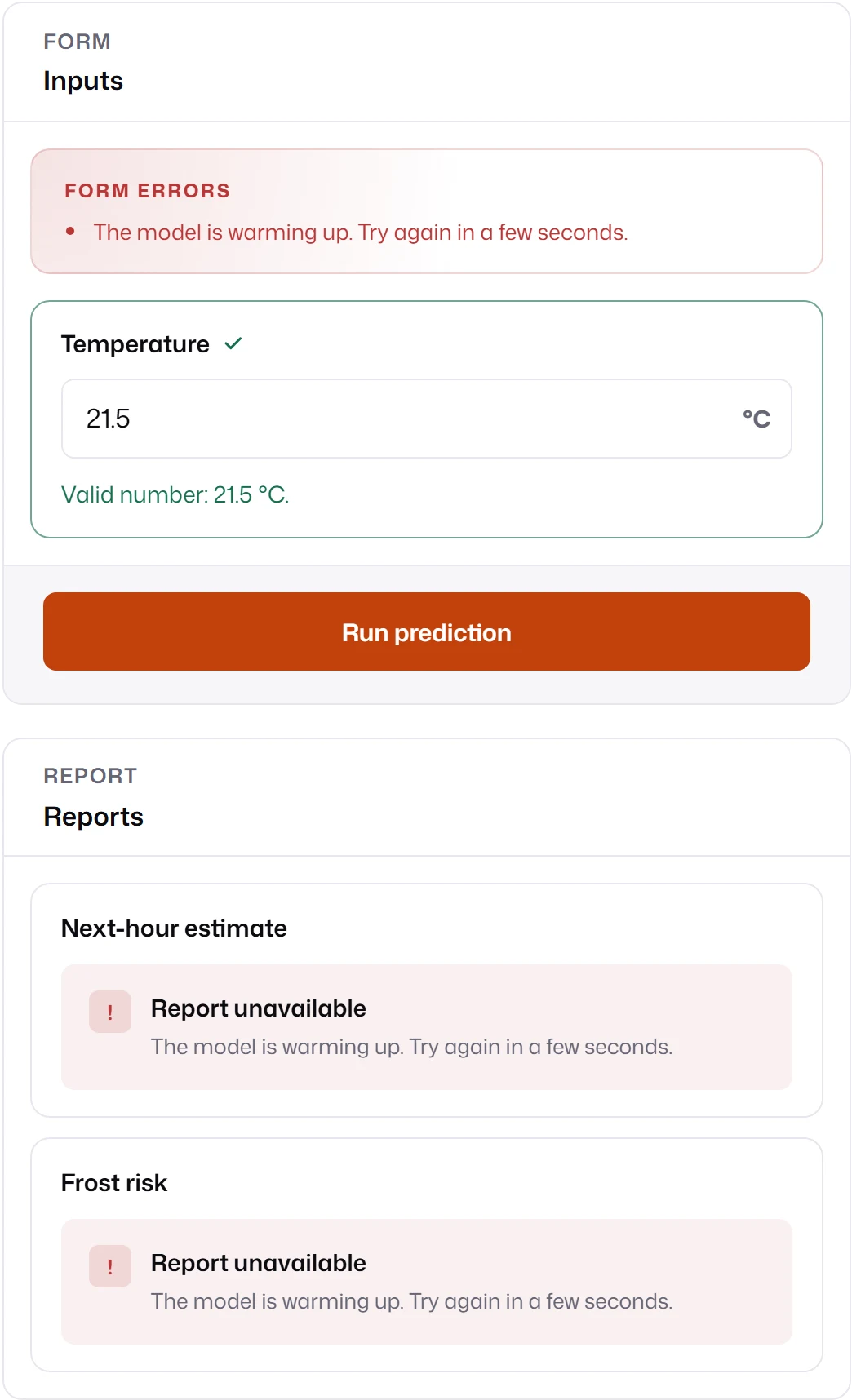
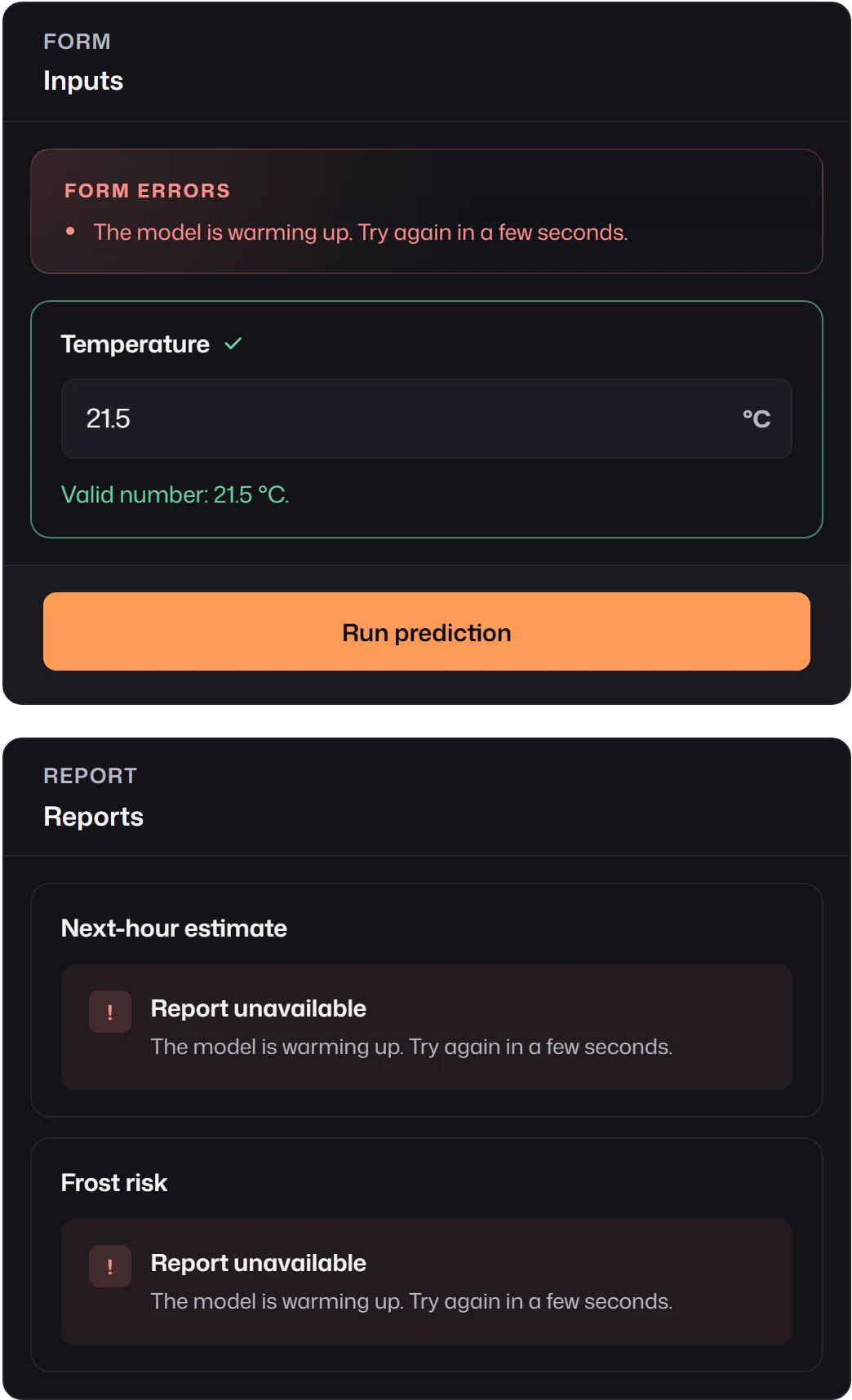
MLForm never parses HTTP responses, so write the message people should read when you throw.
First backend shows how to read
message or detail from a JSON error body. A retry moves reports through loading again and
replaces the error with the new outcome.
The response itself can also fail the submission: a reports value that is not an array, a
malformed envelope, or two envelopes for the same report. See
Backend contract.
Errors for specific fields
Section titled “Errors for specific fields”When the server rejects particular values, put its messages on the fields instead of the form:
const response = await fetch("/api/forecast", { method: "POST", body, signal });if (response.status === 422) { const { fields } = await response.json(); // { humidity: ["Above the sensor's range."] } mounted.form.setExternalErrors({ fields }); throw new Error("Some values were rejected.");}Field keys are runtime ids. The errors clear when the user edits the field, or when you call
clearExternalErrors(). See Validation.
Report errors
Section titled “Report errors”A report enters error on its own when its kind’s resolver throws or its payload fails the kind’s
payloadSchema; the other reports and the submission are unaffected. A kind can opt into failing
the whole submission with payloadValidationPolicy: "fail-submit", which raises
ReportPayloadError with the reportId. Report fetch failures stay in the report as well.
Observing errors
Section titled “Observing errors”hooks.onSubmitError({ error, modelValues, … }) runs for every failed submission and is the place
for notifications and logging. It cannot change the outcome; if the hook itself throws, the
original error is kept and onListenerError receives the hook’s error. See
Lifecycle and hooks.